

Svalbard Trip
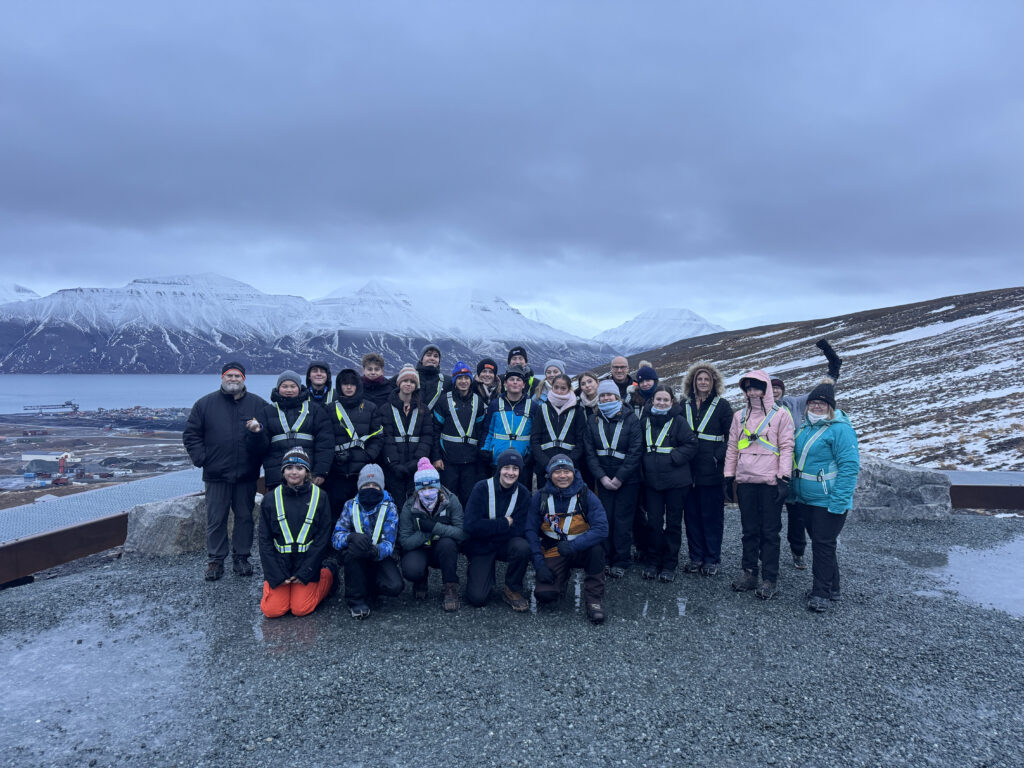
During the half-term break, 22 pupils embarked on an unforgettable expedition to Svalbard, the Norwegian archipelago located between mainland Norway and the North Pole. Accompanied by Miss Barden, Dr Hiscocks, WO2 Mo Thapa (SSI), Mrs Mitchell-Nanson and Mrs Sunde, the group experienced a remarkable week of exploration, discovery and adventure in one of the world’s most unique environments.
Pupil Report by Megan S (Lower Sixth)
The first day was an early start (at school by 0500) and a lot of travel to the northernmost inhabited town in the world, Longyearbyen, on the island of Svalbard. We arrived in time for dinner with a traditional reindeer steak!
On our second day started with a tour of Coal Mine No. 3. We learned that the Coal industry is what built Longyearbyen, originally founded in 1906 by American industrialist John Munroe Longyear. Inside the pitch-black tunnels, our guide explained how miners relied on tight-knit camaraderie and light-hearted nicknames to survive the brutal conditions. We found ourselves walking freely from wide hollowed out tunnels to crawling on our hands and knees through two-foot-high gaps where coal was extracted. Our tour guide also informed us about how mining here is as much about geopolitics as energy. Under the 1920 Svalbard Treaty, any country can conduct economic activity here—which is why countries like Russia have operated Arctic mines at a constant financial loss, purely to maintain a strategic foothold. Deep inside Mine No. 3, we also visited the Permafrost Seed Vault—a natural freezer where sub-zero permafrost keeps agricultural seeds preserved without electrical power. Right beside it is the Arctic World Archive, holding digital historical records on specialized film built to last 1,000 years. We ended at the Svalbard Museum, tracing the islands’ transformation since its discovery by Willem Barentsz’s in 1596. From 17th-century whaling outposts to a hub for polar exploration and climate science.
Our third day in Svalbard began with a much appreciated lie in, before we were allowed to explore the city of Longyearbyen in groups, with many taking full advantage of the local supermarket and shops. The activities of the day began after lunch, where we met with our guides and travelled to the nearby nature reserve in Bjorndalen. Here, we embarked on a nature hike in the valley of two mountains, taking in the incredible views, as well as being able to see inside one of the air chutes of the old mines. Particular highlights of the walk included being shown how the extreme cold of the arctic circle is able to almost perfectly preserve a reindeer carcass, as well as animal droppings. We walked until it got dark, and then travelled to Camp Barentz, (a cabin created in honour of the person who discovered Svalbard, William Barentz) where we were fed traditional reindeer stew along with well received brownies, before receiving a brief lesson on the history of Svalbard and lots of information about the northern lights and the significance of the work that many people who live on Svalbard take part in, and their efforts to preserve the arctic.
After our third night at the cabin we packed our bags and prepared for the day’s hike. Wrapped in warm layers and full of anticipation, we set off into Spitsbergen, passing several polar bear signs that highlighted the unique and remote environment of Svalbard. As soft morning sun illuminated the village and its snow- covered surroundings, we gained a real appreciation for the close-knit community that thrives in such an isolated location. Although the walk began gently, the terrain soon became far more demanding, pupils and staff worked together to navigate ice, mud, freezing streams, and steep, uneven ground. Along the way we discovered fossils embedded in the landscape, providing a fascinating geological past. After two and a half hours of hiking, we finally reached the glacier, and the sight was truly breathtaking. For many of us, it was the first time we had ever seen a glacier of such scale and beauty. Surrounded by towering ice and the sound of fast-flowing meltwater, the landscape felt almost dreamlike. Using specialist walking techniques, we worked together to make our way up and across the glacier, taking in the spectacular views of ice, snow and mountains. We were fortunate enough to enjoy a warm lunch surrounded by the spectacular glacial landscape, giving us time to pause and fully appreciate the breathtaking views before beginning our descent. As we carefully navigated the rocky terrain on the journey back, we were treated to a memorable surprise: a campfire with toasted marshmallows beside a beautiful lake. The reward was greatly appreciated by both pupils and staff, who took the opportunity to thank the tour guides for their expertise and support throughout the expedition. As we said our goodbyes, we reflected on everything we had achieved together, the resilience we had shown, and the unforgettable experiences that had brought us closer as a team.
